
For decades, fashion magazines had us asking one classic question in front of the mirror: “Does my bum look big in this?”
Then came the social media age, flipping the obsession to “sculpting,” “shaping,” and chasing impossible workout trends for aesthetic perfection.
At Bodyfixit, we think it’s time to ask a much better question: Is your bottom strong, functional and fit for purpose?
Our gluteal muscles are so much more than something to be judged or posed for Instagram. They are the engine house of the human body. The good news? Weak glutes are extremely common, completely correctable, and we are all in this together!

What Actually Happens When Glutes Become Weak?
When we sit for long periods or stop using these big muscles, they suffer from “use it or lose it.” When glutes weaken, a domino effect ripples through your entire body:
1. The Aesthetic & Muscle Reality
If glutes are very weak, your bottom loses its rounded shape and becomes saggy. In severe cases or with mobility issues, muscles literally waste away, leaving mostly skin. Your body orientation also shifts, tilting your pelvis forward makes the bottom stick out artificially, which is often a posture compensation rather than true muscle tone.
2. Back Pain & Poor Core Stability
There is a direct correlation between weak glutes and lower back pain. When your glutes aren’t holding up the pelvis, your trunk and lower back muscles step in to help out. They get overworked, fatigued, and tight, leading directly to back aches.
3. The Surprising Pelvic Floor Connection
Underneath your main glute muscles sit deep external hip rotators (like the Piriformis and Obturator Internus), which actually form part of the pelvic wall. When your main glutes go to sleep, these deep muscles try to do all the heavy lifting. They get chronically tight and compromised, which can pull the pelvic floor out of alignment and contribute to pelvic floor dysfunction!
4. Buttock, Hip & Knee Pain
An unstable pelvis can’t “hold” you in place. This leads to pinched nerves, buttock pain, or sudden aches after a longer walk than usual. Even worse, pelvic instability travels down the chain, causing your knees to wobble and absorb awkward loads.
5. Losing Everyday Independence
Simple tasks become surprisingly demanding: getting up out of a chair, stepping off the floor, or climbing stairs. Even normal walking becomes inefficient as your body invents awkward movement patterns to shore itself up.

What You DON’T Need To Do (Avoid the Social Media Trap!)
Please don’t fall for those crazy “5-minute butt-sculpting” clips on social media.
Most of those videos show half-naked influencers performing exercises with terrible spinal biomechanics – arching their lower backs and making their spine do the work instead of their glutes!
As a general rule of thumb: If the instructor is half-naked, ignore the clip. (If they’re fully naked, you’ve stumbled onto the wrong website entirely!)
You don’t need dangerous 20kg weights or extreme movements. Good exercise form beats flashy social media trends every single time.

Your Agenda for Change: Simple Steps to Wake Up Your Glutes
Rebuilding glute strength doesn’t have to be overwhelming. Here is your straightforward action plan:
- Get persistent pain checked out: If you have long-standing back, hip, or knee discomfort, see an Osteopath, Physio, or your GP. Manual therapy can work wonders to get you moving safely again.
- Stretch the front of your hips: Tight hip flexors from sitting “turn off” your glutes. Stretching the front of your hips gives your glutes room to work.
- Stand more, sit less: We all have to sit, but make a habit of standing up periodically and stand properly with a neutral pelvis so your glutes naturally engage.
- Walk a little more: Just 10 minutes of walking a day is a fabulous start. Push off through your back heel with each step to wake up your bottom.
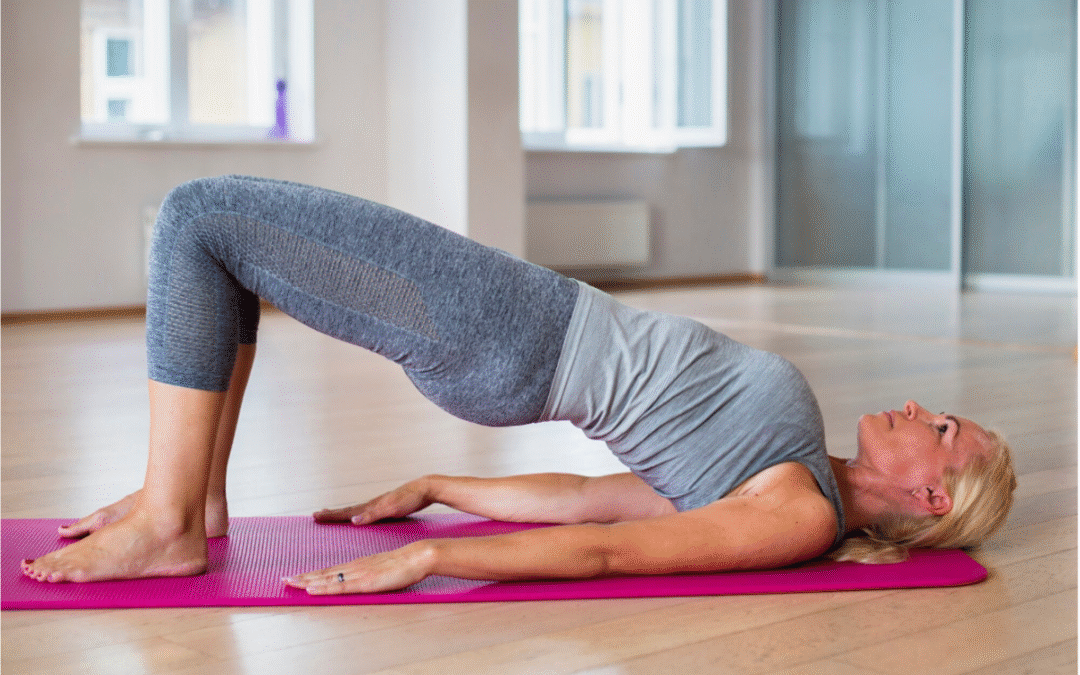
- Smart Strength Training (Pilates & Beyond): You don’t need heavy gym barbells. Bodyweight exercises like the classic Glute Bridge allow you to safely overload the glutes without straining your spine.

How Different Exercises Help Your Glutes
- Mat & Reformer Pilates: The gold standard for isolating the glutes safely. Exercises like bridges, clams, and swimming legs (done with a flat, supported spine!) retrain your brain to fire your glutes before your back kicks in.
- Brisk Walking: Natural, functional glute extension that keeps joint fluid moving.
- Controlled Sit-to-Stands: Practicing getting up from a dining chair without using your hands builds essential leg and glute power for real life.
- Swimming: Gentle water resistance builds glute endurance while taking all pressure off stiff knees and hips.

Remember: A Bum is for Life, Not Just for Instagram!
Let’s stop coveting impossible social media standards and focus on building a body that carries you smoothly through life.
Ready to wake up your glutes, support your back and feel lighter on your feet? Come along to a beginners Pilates trial class starting in November – we’ll make sure your glutes are doing the work, safely and comfortably!